IT 8 April 2026
Self-Hosting Postgres in 2026: A Practical Checklist
Managed Postgres is wonderful — until the bill arrives. Here's what we learned moving 200 GB back to a self-hosted instance.
 Sergio Romano
For most teams, managed Postgres (RDS, Neon, Supabase) is the right answer. Until it isn't. We crossed that line at around 200 GB and four-figure monthly bills.
The checklist that worked for us
- Backups before anything else. Daily
pg_basebackup+ WAL archiving to S3, restored monthly to verify. - Connection pooling. PgBouncer in transaction mode, sized to your real concurrent load (not the headline).
- Observability.
pg_stat_statements, plus a Grafana dashboard for slow queries, replication lag, and bloat. - Failover plan. Even if you start with one node, write down the recovery procedure now.
- Encryption. At rest (LUKS) and in transit (TLS only).
Six months in: same uptime, half the cost, and fewer surprises in the monthly invoice. Your mileage will vary — but if you're spending more on managed than on engineers, it's time to do the math.
More to read
All articles Related articles.
 IT
ITWhy React Server Components Are More Than Just Hype
After two years in production, RSC has matured. Here's what actually changed about how we build apps — and where the rough edges remain.
 IT
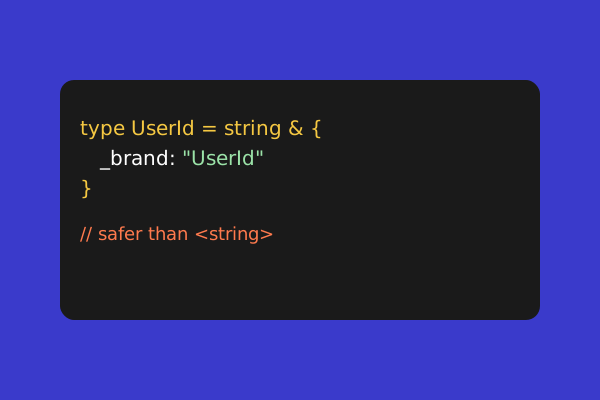
ITThe Quiet Power of TypeScript: Branded Types for Safer APIs
Branded types are the cheapest, least-known TypeScript trick that catches an entire class of bugs at compile time.